[vc_row][vc_column][vc_column_text css_animation=”fadeInUp”]
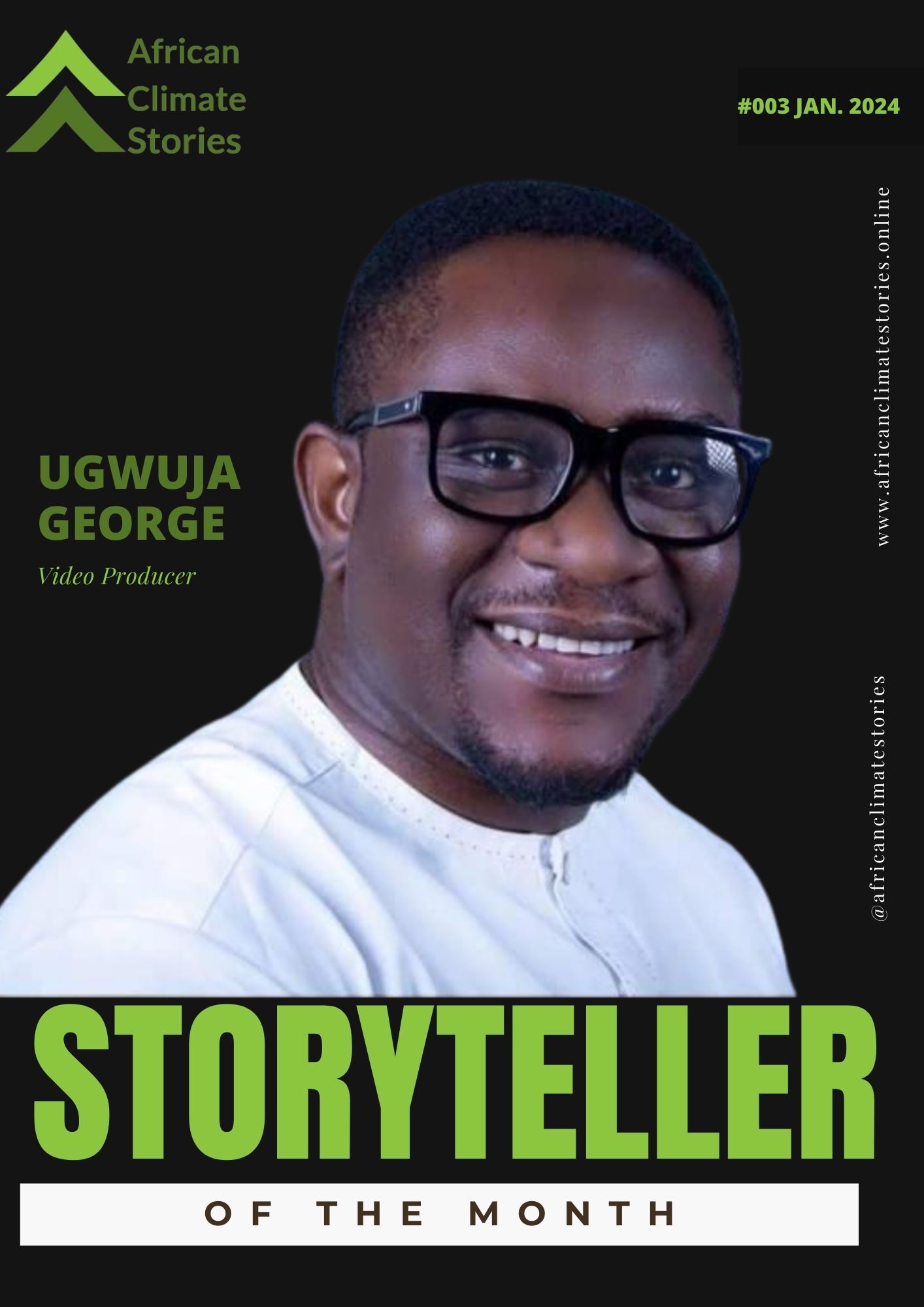
As we launch into the new year and continue to showcase the works of diverse multimedia storyteller using their skills to drive environmental and climate action, we are super excited to meet the African Climate Storyteller of the Month of January 2024.
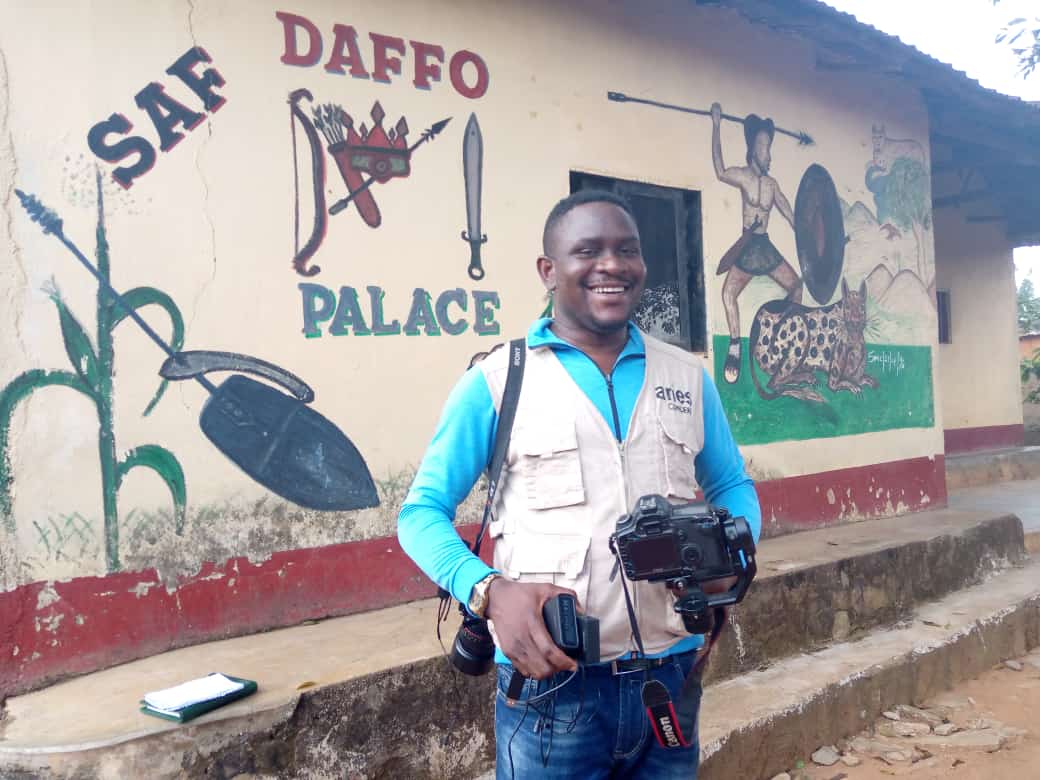
Meet George Ugwuja, a Nigerian documentary filmmaker, video content creator and founder of Capital Power Multimedia
Tell us what you do George:
I am a gifted filmmaker and video creator who has dedicated my creative talents to the powerful cause of humanity. In the last 17 years, I have built my passion for storytelling and a deep commitment to raising awareness about the SDGs, starting from my active participation as a volunteer content contributor to UNICEF Voices of Youth blog. Ever since then, I have worked in partnership with INGOS to drive positive change through storytelling.
My journey as a documentary film and video creator of environmental advocacy stories began with a profound realization of the urgent need to address environmental challenges arguing that since The SDG framework has a total of 17 goals, 169 targets and 244 indicators— 93 of which are environment related which measures the most pressing issues facing the planet, including the interactions between topics. Drawing inspiration from the beauty of nature and the pressing need to protect it, I set out to use my creative skills to shed light on environmental issues that often go unnoticed.
In 2019, I brought a team of media professionals together and launched Capital Power Multimedia, A full-fledged content creation agency that has helped to propagate my passion for the environment by working with NGOs, Government and the Private sector to produce compelling documentary films and videos that capture the essence of environmental advocacy, weaving together narratives that evoke empathy, provoke thought, and inspire action.
In 2019 I partnered with WASTE Africa and Coca-Cola foundation to document the ‘protect 10,000 initiative’ which empowered 10,000 member- informal sector waste pickers and vulnerable groups dependent on waste for their livelihoods. This advocacy production attracted more attention to waste pickers and generated donation from international organizations including the Schwizerischi Eidgnosseschaft Schweizerische Eidgenossenschaft, Confédération suisse, Confederazione Svizzera, and Confederaziun svizra.
I was later also consulted by the UN-REDD Programme to lead the field team that traveled to cross river to document the success story of the Community based forest management in Nigeria (CBR+ projects- agro forestry + mangrove replanting). This documentary has been premiered in different countries of the world during UN conferences.
With a keen eye for visual storytelling and a deep understanding of environmental concerns, I have skillfully crafted narratives that highlight the interconnectedness of humanity and the natural world. My documentaries and videos serve as a poignant reminder of the responsibility we all share in safeguarding our planet for future generations.
Ugwuja George
Founder, Capital Power Multimedia
By 2020, I and my team traveled to Bauchi state to document how MEDA and Global Affairs Canada (GAC) are working together to support women and youth-run businesses in the processing sector and food industry of Bauchi State, Nigeria on how to use environmentally friendly processes to process food. The project team worked in three main value chains: rice, peanut, and soybean and also helped women with alternative cooking stoves to save trees and reduce emission. The Federal Ministry of Environment in concert with the World Bank and its partner agencies designed the Nigeria Erosion and Watershed Management Project (NEWMAP) to address on a multi-dimensional scale the menace of gully erosion in the south east as well as land degradation in the North. I led a team to visit Gombe and produced this documentary for Gombe State government to showcase their milestones and to seek for more funding to continue to battle gully erosion.
I visited Pad-Up creations in Niger State Nigeria to document the success story of green jobs in Nigeria. The Challenge Fund for Youth Employment (CFYE) is a 7-year programme funded by the Netherlands Ministry of Foreign Affairs. The Fund is managed by the Palladium Group, Randstad and VSO. The Fund aims to create a prosperous future for 230,000 young women and men in the Middle East, North Africa, Sahel & West Africa and Horn of Africa. This will be achieved by supporting youth employment initiatives in these regions. Initiatives will offer youth, particularly young women, opportunities for decent work that delivers better prospects for personal development. The Nigeria story has been premiered in international programs causing the donor agencies to map out scale up funding across Africa.
With a keen eye for visual storytelling and a deep understanding of environmental concerns, I have skillfully crafted narratives that highlight the interconnectedness of humanity and the natural world. My documentaries and videos serve as a poignant reminder of the responsibility we all share in safeguarding our planet for future generations.
As I continue to weave my creative vision into compelling narratives of environmental advocacy, I will remain an inspiring force for change, using the art of filmmaking to amplify the voices of nature and advocate for a sustainable future.
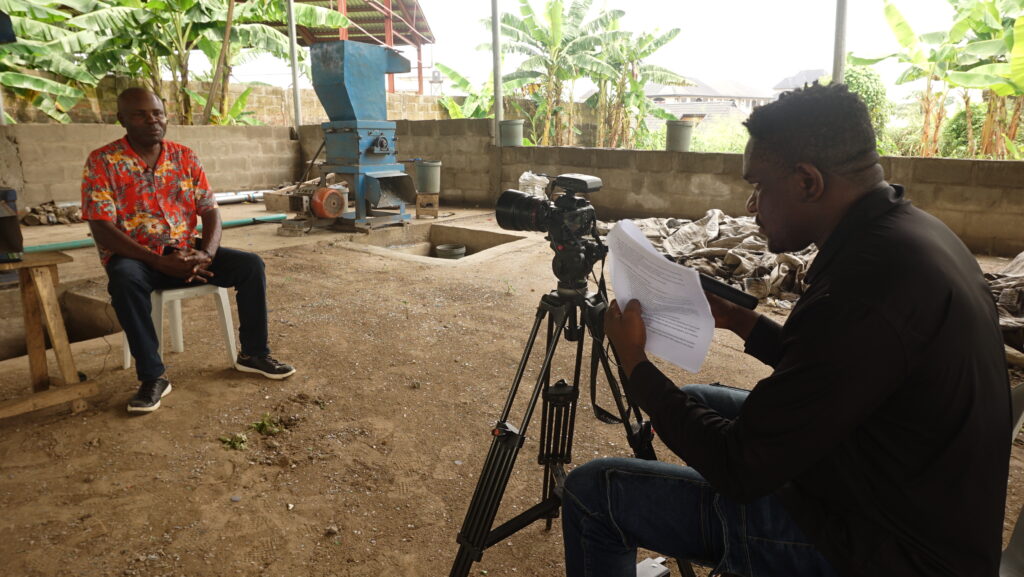
So what inspired you to become an environmental advocate through video creation?
I believe that videos have the ability to engage and inspire people in a way that other forms of communication may not. Through video creation, I aim to educate, motivate, and mobilize all relevant stakeholders to take action in support of environmental conservation and sustainability. I am committed to using my skills to amplify the voices of environmental advocates and drive positive change for our planet.
What inspired you to become an environmental advocate through video creation?
During the implementation of the MDGs, before the advent of the SDGs, I was consulted by Office of the Senior Special Assistant to the President on Millenium Development Goals to visit over 20 states across Nigeria to document the impact of MDGs interventions in local communities. When I got to remote communities in Bayelsa State, I saw firsthand, the level of devastation caused by oil spills. And in the north, I saw how deforestation has caused severe weather conditions. This firsthand encounter with the environmental challenges and their effects on local communities inspired a deep sense of responsibility and a desire in me to advocate for positive change through storytelling.
How do you believe video content can effectively raise awareness about environmental issues?
Video content can effectively raise awareness about environmental issues by visually showcasing the impact of these issues on the natural world and communities. Through compelling visuals, video content can capture the attention of viewers and evoke emotional responses, making the issues more relatable and urgent. Additionally, video content has the potential to reach a wide audience through various digital platforms, maximizing its impact and outreach. By presenting solutions, success stories, and calls to action, video content can inspire and mobilize relevant stakeholders to take positive steps toward environmental conservation and sustainability.
What challenges have you faced in conveying complex environmental messages through video, and how have you overcome them?
Conveying complex environmental messages through video has presented several challenges, such as: simplifying complex issues, bringing emotional impact and the right visual representation. Depicting abstract concepts such as climate change or biodiversity loss in a visually engaging and accurate manner can be a challenge.
To overcome these challenges, I try to:
- Engage with subject matter experts to ensure accuracy and clarity in conveying complex environmental concepts mostly working with local and international stakeholders that are trusted with the mandate of environmental protection.
- I use personal stories and local examples to make complex issues more relatable and emotionally impactful for viewers.
- Use visual aids, infographics, and animations to simplify complex data and concepts, making them more accessible and engaging for the audience.
- Offer practical steps that viewers can take to address the issues presented in the video, empowering them to make a positive impact.
By addressing these challenges through collaboration, personalized storytelling, visual aids, and actionable content, I am able to effectively convey complex environmental messages through video.
How do you strike a balance between presenting urgent environmental concerns and providing hope and actionable solutions in your content?
I try to clearly articulate the urgency of environmental concerns by presenting factual evidence, real-life examples, and expert insights. This helps viewers understand the severity of the issues. I share stories of individuals and communities that have successfully implemented solutions or are actively engaged in positive environmental initiatives tp provide hope and inspiration.
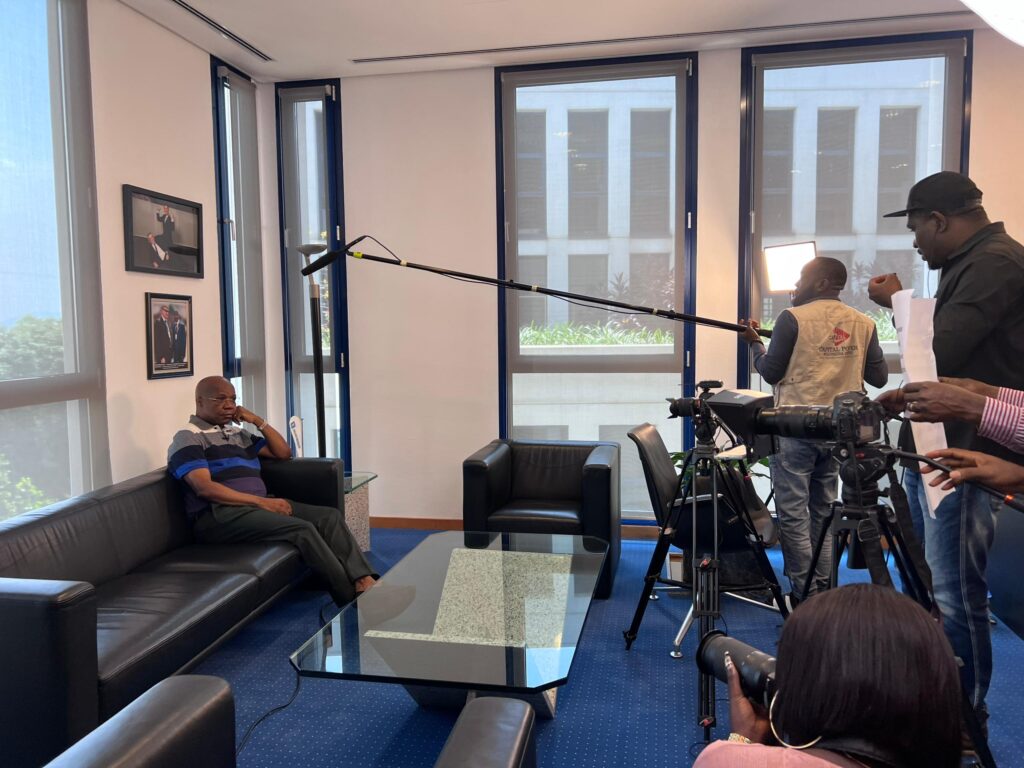
Could you share a success story where your video advocacy led to tangible positive change or increased awareness?
My evidence-based advocacy documentary about gully erosion in Gombe state has helped the government to raise billions of Naira in additional funding and is currently surmounting gully erosion in the state. That alone gives me immense joy.
How do you stay informed about the latest developments in environmental issues to keep your content relevant and impactful?
I stay informed about the latest developments in environmental issues by regularly monitoring reputable sources such as scientific journals, environmental organizations, and news outlets. I also engage with experts in the field, attend environmental conferences and workshops, and collaborate with organizations to access the latest research, data, and best practices. Additionally, I actively seek out community engagement to understand local environmental concerns and experiences, ensuring that my content reflects real-world challenges and solutions. This approach allows me to maintain a deep understanding of current environmental issues, ensuring that my content remains relevant, accurate, and impactful.
How do you handle criticism or skepticism regarding environmental issues in your videos, and how does it shape your approach?
I try to approach criticism with openness, evidence-based responses, and a commitment to continuous improvement. I aim to shape a more informed and engaging approach to environmental storytelling in my videos.
Are there particular environmental issues that you feel are often overlooked, and how do you address them in your videos?
Plastic pollution is a major environmental problem in Nigeria. Plastic comes from fossil fuels, which we need to phase out, so using less plastic is important. But ultimately solving the problem of plastic pollution may come down to improving waste management technology and creating a more circular economy for plastics. I have been addressing them by telling stories that resolve around the economic importance of recycling so I can encourage companies to invest in recycling…I do also promote organizations that implement recycling center interventions to bring more visibility and momentum.
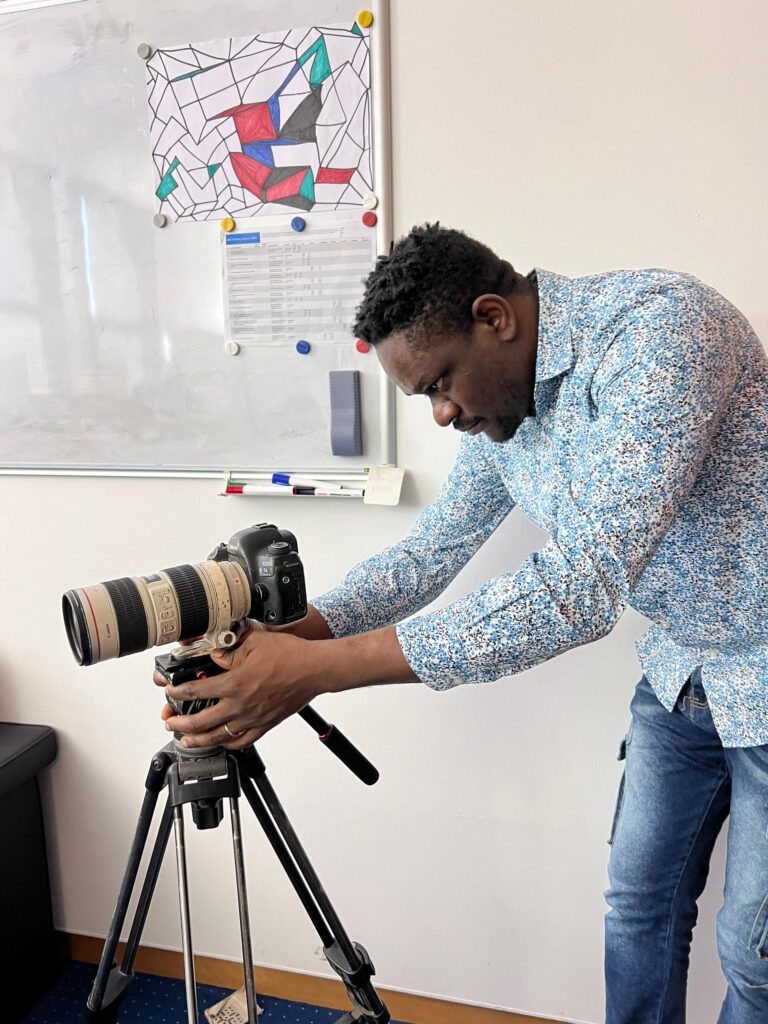
Any advice to upcoming video content creators who want to tell environmental advocacy stories?
For upcoming video content creators who want to tell environmental advocacy stories, here are some key pieces of advice:
- Take the time to educate yourself about a wide range of environmental issues, including climate change, biodiversity loss, pollution, and conservation efforts. Stay informed about the latest developments and research in the field.
- Infuse your storytelling with authenticity and genuine passion for environmental advocacy. Audiences are more likely to connect with content that comes from a place of sincere commitment.
- Build relationships with experts, environmental organizations, and like minded creators to gain insights, access resources, and foster collaboration on impactful projects.
We hope you enjoyed this piece.
If you will like to be featured as one of our Climate Storyteller’s of the month? Kindly use this link to indicate interest or share with friends who qualify: African Climate Stories – Storyteller of the Month.